
I was about to skip over what seemed an innocuous edition of the works of Shakespeare, when I balked at the title: Mr. William Shakespeares Comedies, Histories, amp; Tragedies. Published according to the True Originall Copies. I nearly had a heart attack. Beneath the Bard’s portrait, the publishers and the date: "London, Printed by Isaac Iaggard and Ed. Blount. 1623." I checked the collation, the measurements (34.2 by 22.6 centimeters, very generous margins): shiver my timbers, hell’s bells, saccaroa-this was the unobtainable 1623 folio!
Every antiquarian, I think every collector, daydreams at some point about the ninety-year-old lady. A little old lady with one foot in the grave and no money to pay for her medications, who comes to you saying she wants to sell some of her great-grandfather’s books that have been sitting in her cellar. You go to take a look, just to make sure, and find a dozen or so volumes of little value before suddenly noticing a large, poorly bound folio, its parchment cover utterly worn out, its headcaps gone, its joints failing, its corners eaten away by rats, heavily stained. You are struck by the two columns of Gothic script, you count the lines, forty-two, you race to the colophon… It is Gutenberg’s forty-two-line Bible, the first book ever printed in the world. The last copy on the market (the others are all on display in famous libraries) fetched I forget how many millions of dollars-billions of lire-recently at a New York auction, secured, I believe, by some Japanese bankers, who immediately locked it away in a safe. A new copy, still in circulation, would be priceless. You could ask whatever you wanted for it, a gazillion lire.
You look at the little old lady, you know that if you gave her just ten million she would be perfectly happy, but your conscience nags at you: you offer her a hundred, two hundred million, enough to put her back on her feet for the few years she has left. Then naturally, once you get back home, hands trembling, you have no idea what to do. In order to sell the book, you would have to mobilize the great auction houses, and they would take a big chunk of the profits and the other half would go to taxes, so you would prefer to hold on to it, but you could never show it to anyone, because if word got around then half the world’s thieves would be at your door, and what pleasure would there be in having that prodigious thing and not being able to make other collectors green with envy. Forget insurance, the cost would make you faint. What should you do? Loan it to the city, let them keep it, say, in a room in the Castello Sforzesco, under bulletproof glass, with four armed gorillas to guard it day and night? Then if you wanted to look at your book you would have to wade through a crowd of idlers who all want to see the rarest thing in the world up close. And then what do you do, elbow the next guy and say that’s my book? Is it worth it?
It is then that you think not of Gutenberg but of Shakespeare’s first folio. It would bring a few billion less, but it is well known only to collectors, so it would be easier either to keep it or to sell it. The first folio of Shakespeare. Every bibliophile’s number two dream.
How much was Sibilla asking for it? I was dumbstruck: a million, as if it were any old book. Was it possible that she did not know what she had in her hands? And when had it come into the studio, and why had she not said anything? I’ll fire her, I’ll fire her, I murmured furiously.
I called her to ask if she realized what item 85 in the catalogue was. She sounded taken aback: it was seventeenth-century, not much to look at, indeed she was quite pleased to have already sold it, right after she sent me the proofs, for only twenty thousand lire less than the asking price, so now she was taking it out of the catalogue since it was not even the sort of thing you would leave in and mark SOLD, just to show what good pieces you had. I was about to tear into her, when she burst out laughing and told me I should watch my blood pressure.
It was a joke. She had inserted that entry to see if I was reading the proofs carefully, and if my scholarly memory was still in good shape. She laughed impishly, proud of her hoax-which among other things echoed certain celebrated pranks we fanatics like to play, and certain catalogues have themselves become collectible precisely because they offered impossible or nonexistent books and even experts had been fooled.
"Such a practical joker," I finally said, but by now I was lying down. "You’ll pay for that. But the rest of the entries are perfect, no need for me to send them back, I don’t have any corrections. Let’s go forward, thanks."
I relaxed: people do not realize it, but to somebody like me, in the state I am in, even an innocent joke could bring on the big one.
By the time I finished speaking with Sibilla, the sky had turned the color of a bruise: another storm was coming, a real one this time. With the light as it was, I was relieved of the obligation or the temptation to go into the chapel. But the attic would still be lit by the dormers, and I could spend at least an hour browsing there.
I was rewarded with another box, unlabeled, thrown together by my aunt and uncle, full of illustrated magazines. I brought the box downstairs and began leafing through them casually, as one does in a dentist’s office.
I looked at the pictures in some of the movie magazines, lots of actor photos. There were of course Italian films, these, too, utterly and openly schizophrenic: on one hand, propaganda flicks such as The Siege of Alcazar and Luciano Sena, Pilot; on the other, films with gentlemen in tuxedos, dissipated women in snow-white bed jackets, and luxurious decor, such as white telephones beside voluptuous beds-at a time when, I imagine, all phones were still black and attached to walls.
But there were also photos from foreign films, and I felt a few slight twinges of flame on seeing the sensual face of Zarah Leander, or of Kristina Söderbaum from Goldene Stadt.
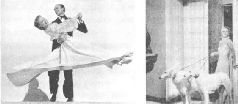
Last, many stills from American movies-Fred Astaire and Ginger Rogers dancing like dragonflies, the John Wayne of Stagecoach. In the meantime I had reactivated what I thought of by now as my radio, hypocritically ignoring the gramophone that made it sing, and I had picked out some records whose titles resonated with me. My God, Fred Astaire was dancing with and kissing Ginger Rogers, but in the same years Pippo Barzizza and his orchestra were playing melodies I knew, because they were a part of everyone’s musical education. It was jazz, no matter how Italianized; the record called "Serenità" was an adaptation of "Mood Indigo," another one that had been pirated as "Con stile" was "In the Mood," and "Tristezze di San Luigi" (Luigi IX or Luigi Gonzaga?) was "St. Louis Blues." None had lyrics, except for the ham-fisted ones of "Tristezze di San Luigi," so as not to give away their very un-Aryan origins.
In short, between jazz, John Wayne, and the chapel comics, my childhood had been spent learning that I was supposed to curse the English and defend myself against the evil Negroes who wanted to defile the Venus de Milo, and at the same time I was lapping up messages from the other side of the ocean.
From the bottom of the box, I plucked a packet of letters and postcards addressed to my grandfather. I wavered for a moment, because it seemed sacrilegious to pry into his personal secrets. Then I told myself that my grandfather was, after all, the recipient, not the author, of those writings, that the authors were others, to whom I owed no consideration.
I read through those missives not expecting to learn anything of significance, and yet I did: in replying to my grandfather, those people, probably friends whom he trusted, made references to things he had written to them, and a more accurate portrait of my grandfather emerged. I began to understand what he had thought, what kind of friends he had spent time with or cultivated prudently from a distance.